Saudi Arabia Luxury Travel 2026: The Complete Guide
Saudi Arabia is the most significant luxury travel story of the current decade. Private islands on a pristine Red Sea that has never been commercially dived. Desert cities built by an ancient civilisation 2,000 years before the current Kingdom existed. Palace hotels on the scale of European chateaux. And across all of it, an infrastructure investment programme that is transforming what was, a decade ago, one of the world's least-visited countries into one of its most remarkable destinations.
This guide covers everything a first-time luxury traveller to Saudi Arabia needs to know: the four essential destinations, the best hotels in each, visa logistics, ideal timing, and the experiences that reward the journey most. It draws on years of tracking the Kingdom's finest properties since their opening, so you can compare the options that matter and book the right stay with confidence.
The Four Essential Saudi Arabia Luxury Destinations
1. The Red Sea, Private Islands & Overwater Villas
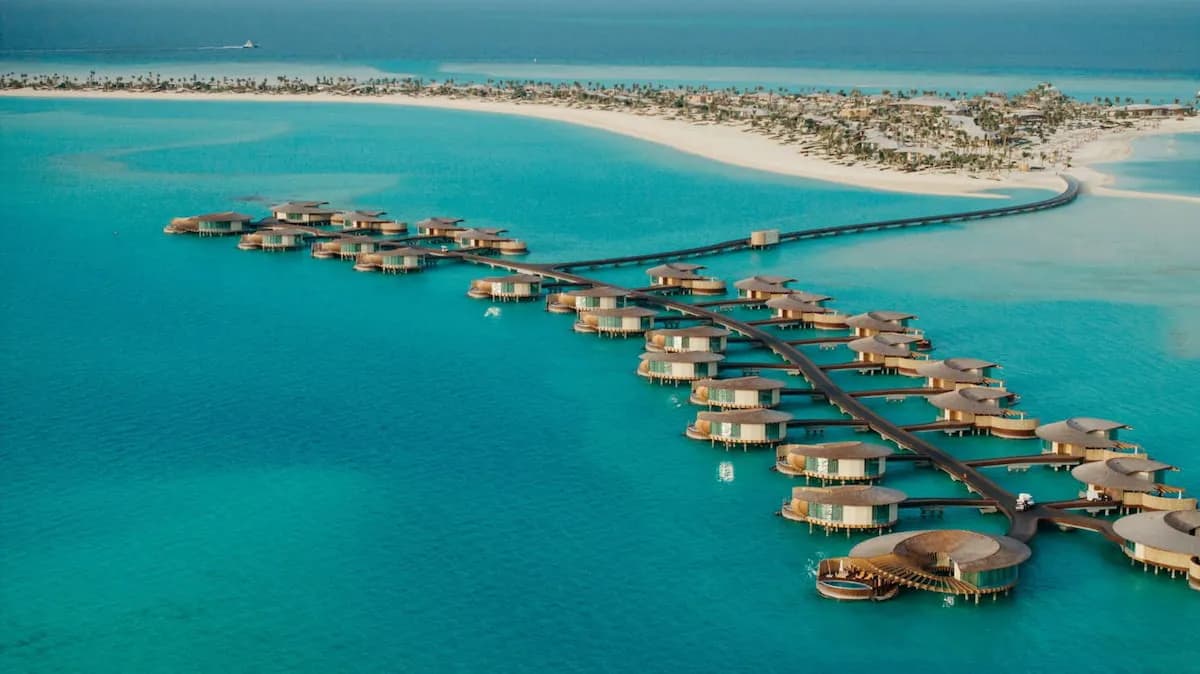 St. Regis Red Sea Resort
The Red Sea Project, Saudi Arabia's most ambitious tourism development, spans 28,000 square kilometres of pristine archipelago on the northwest coast. The islands here have never been commercially developed; the coral reefs have never been commercially dived. The result is one of the most biologically diverse marine environments on earth, combined with some of the most architecturally extraordinary overwater accommodation in the world.
The leading properties are the St. Regis Red Sea Resort (90 overwater and beach villas, butler service, private plunge pools) and Nujuma, a Ritz-Carlton Reserve (63 villas on a private island, seaplane access, 2,500-island marine reserve). Both opened between 2023 and 2024, which means you are still arriving early, before the word is fully out and before the coral has seen a decade of snorkelling traffic.
The Red Sea is at its best between October and April, when water temperatures sit around 25°C and visibility exceeds 30 metres. In summer (June-September), conditions are hotter and wind patterns can affect sea conditions; most guests plan their stays in the cooler months.
2. AlUla, Ancient Heritage & Desert Luxury
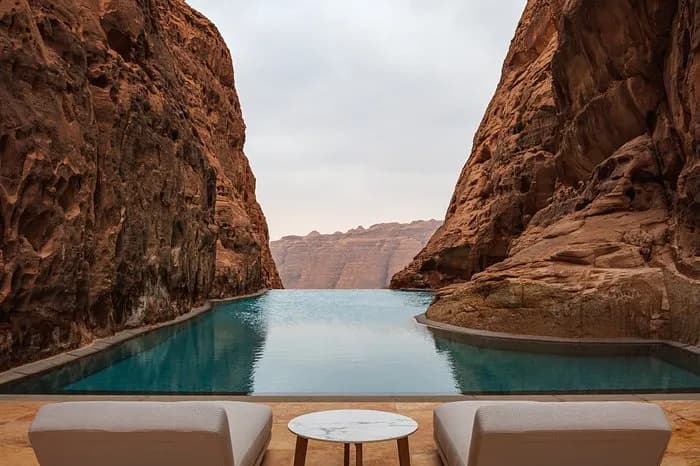 Banyan Tree AlUla
AlUla is a 200-kilometre sandstone valley in northwestern Saudi Arabia, one of the oldest continuously inhabited landscapes on earth. The Nabataean city of Hegra, with its 111 monumental tombs carved from rose-gold sandstone, was Saudi Arabia's first UNESCO World Heritage Site and predates Petra by centuries. The natural geology, Elephant Rock, the Ashar Valley, the canyon walls that catch the light at dawn and dusk, is extraordinary by any standard.
The luxury hotel collection is now substantial: Banyan Tree AlUla (private plunge pools, canyon views), Six Senses Southern Dunes (transformative wellness, biohacking, stargazing), The Chedi AlUla (Zen minimalist design), and Habitas AlUla (wellness community, sunrise yoga). All four properties are at an altitude that keeps winter temperatures comfortable, 18-26°C between October and March.
AlUla is worth a minimum of 4 nights, enough to cover Hegra, Dadan, Jabal Ikmah, Elephant Rock, and Old Town AlUla without rushing. The Winter at Tantora festival (December-March) adds acclaimed performances at Maraya, the iconic mirrored concert hall.
3. Riyadh, Palace Hotels & Cultural Depth
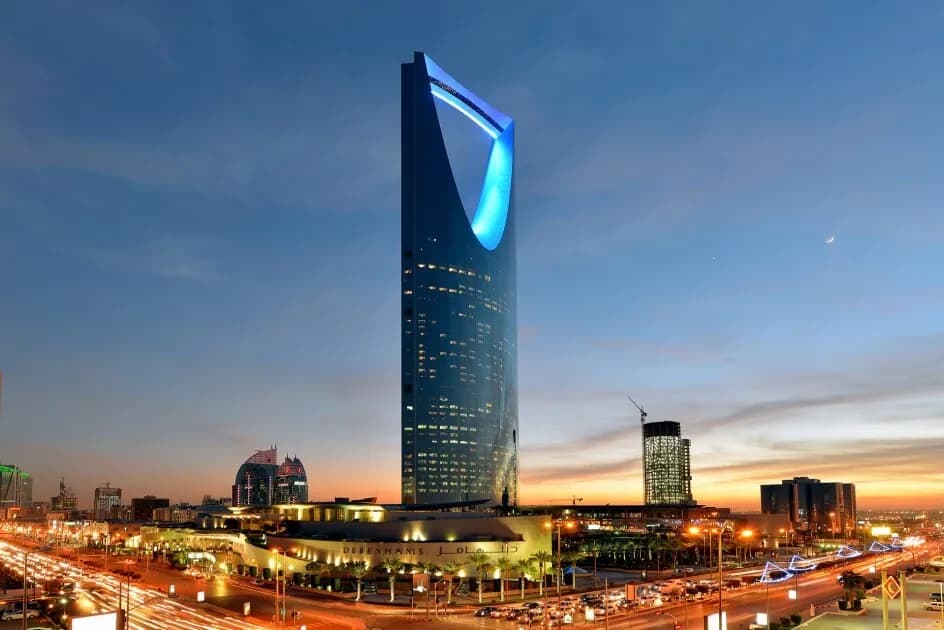 Four Seasons Riyadh at Kingdom Centre
Saudi Arabia's capital is a city that rewards those who look beyond its reputation for scale. The Ritz-Carlton Riyadh, originally built as a palace, not a hotel, and the Four Seasons at Kingdom Centre are among the best luxury hotels in the Middle East. The Edge of the World, 90 minutes away by private 4WD, is one of the most dramatic natural landscapes in the region. The UNESCO-protected Diriyah ruins, birthplace of the Saudi state, offer some of the most atmospheric heritage access in the Kingdom.
Riyadh is best visited October through April and works most powerfully as the first stop on a Saudi circuit, the National Museum's pre-Islamic collections provide the intellectual context that transforms AlUla from a photogenic rock formation into a living civilisation with a traceable story.
4. Jeddah, Cosmopolitan Culture & Red Sea Gateway
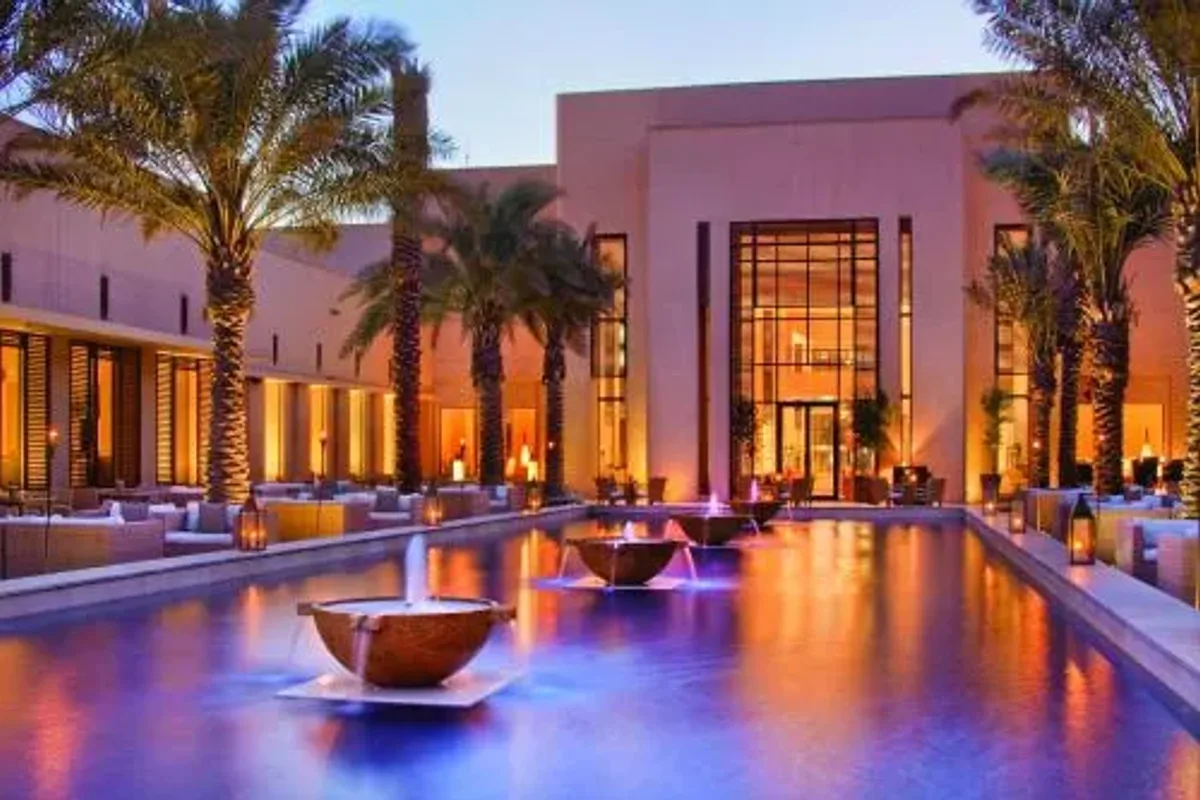 Park Hyatt Jeddah Marina
Jeddah is Saudi Arabia's most cosmopolitan city, a port for 2,500 years, it has a cultural depth that distinguishes it from every other major Saudi city. The UNESCO-listed Al-Balad district, built from coral stone with hand-carved timber balconies, is one of the most architecturally singular urban environments in the world. The King Fahd Fountain, the world's tallest, best seen from a private yacht at night, is a genuinely extraordinary spectacle. And the hotel collection (Rosewood, Park Hyatt Marina, Waldorf Astoria Qasr Al Sharq) is the most consistent in the Kingdom.
Most importantly, Jeddah is 25 minutes by seaplane from the Red Sea island resorts. The ideal Saudi circuit starts here, two to three nights exploring the city, then a private seaplane transfer to an overwater villa for the second act.
Visas & Practical Information
How to Plan a Luxury Saudi Arabia Trip
The most important thing to understand about a luxury Saudi Arabia itinerary is that the destinations complement each other in a way that rewards combining them. A well-balanced 10-day circuit looks like this: two nights in Riyadh (cultural context), three nights in AlUla (heritage and desert luxury), two nights in Jeddah (city and culture), and four nights at a Red Sea island resort (pure relaxation).
Shorter trips are possible, a five-night Red Sea island stay is entirely self-contained, but the multi-destination circuit is the experience that produces the most profound understanding of a country that most of the world has not yet discovered.