
Diriyah 2026: Saudi Arabia's Most Important Heritage Destination
The birthplace of the Saudi state, At-Turaif UNESCO district, Bab Samhan luxury hotel, and how to experience Diriyah as it transforms into a landmark heritage destination.
Fifteen minutes from central Riyadh, the Wadi Hanifah valley holds a collection of mud-brick towers, arched palaces, and ancient mosques that tell the founding story of the Saudi state. This is Diriyah, the ancestral seat of the Al Saud royal family, the capital of the First Saudi State, and a UNESCO World Heritage Site now undergoing one of the most ambitious heritage restoration programmes in the Arab world. A visit to Diriyah is no longer optional on a luxury Riyadh itinerary. It is the destination that explains everything that follows.
Diriyah At a Glance
Distance from Riyadh
15–20 min by car
UNESCO Status
At-Turaif, inscribed 2010
Best Time to Visit
Oct – Apr, late afternoon
Hotel in Diriyah
Bab Samhan (Luxury Collection)
Heritage Site
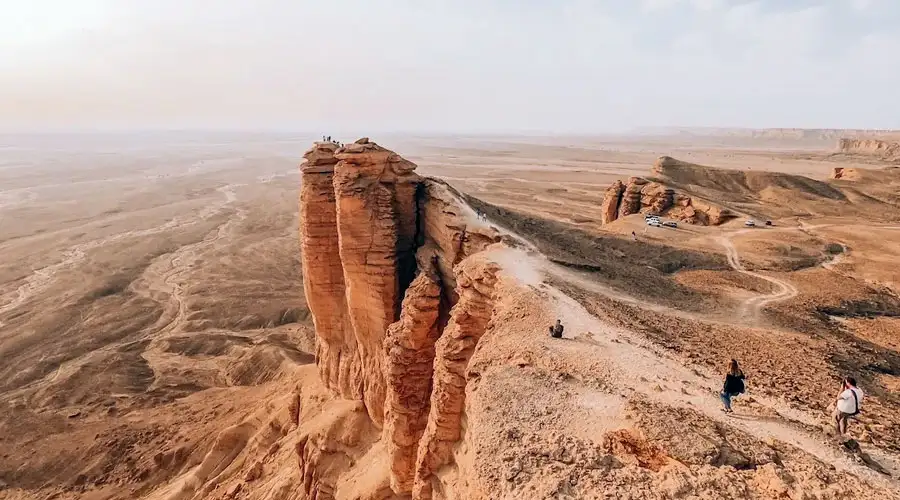
At-Turaif is the heart of Diriyah, a 300-year-old mud-brick district that served as the seat of the First Saudi State in the 18th century and was inscribed on UNESCO's World Heritage List in 2010. The district is built from the same reddish-brown mud brick as Hegra in AlUla, and the architecture, massive walls, arched windows, geometric motifs, has a weight and solidity that photographs do not capture. Walking through At-Turaif at dusk, as the setting sun turns the mud walls amber, is one of the most atmospheric heritage experiences in the Arabian Peninsula.
The Diriyah Gate Development Authority is restoring At-Turaif to become one of the most significant heritage tourism projects in the world, a living district of museums, galleries, and cultural institutions, not simply a preserved ruin. The Al-Saud Palace complex, the Salwa Palace, and the mosque and well complex are all open and interpretively presented. A private guide is strongly recommended: the layers of history, political, architectural, and religious, are dense and reward a careful guide.
Luxury Hotel
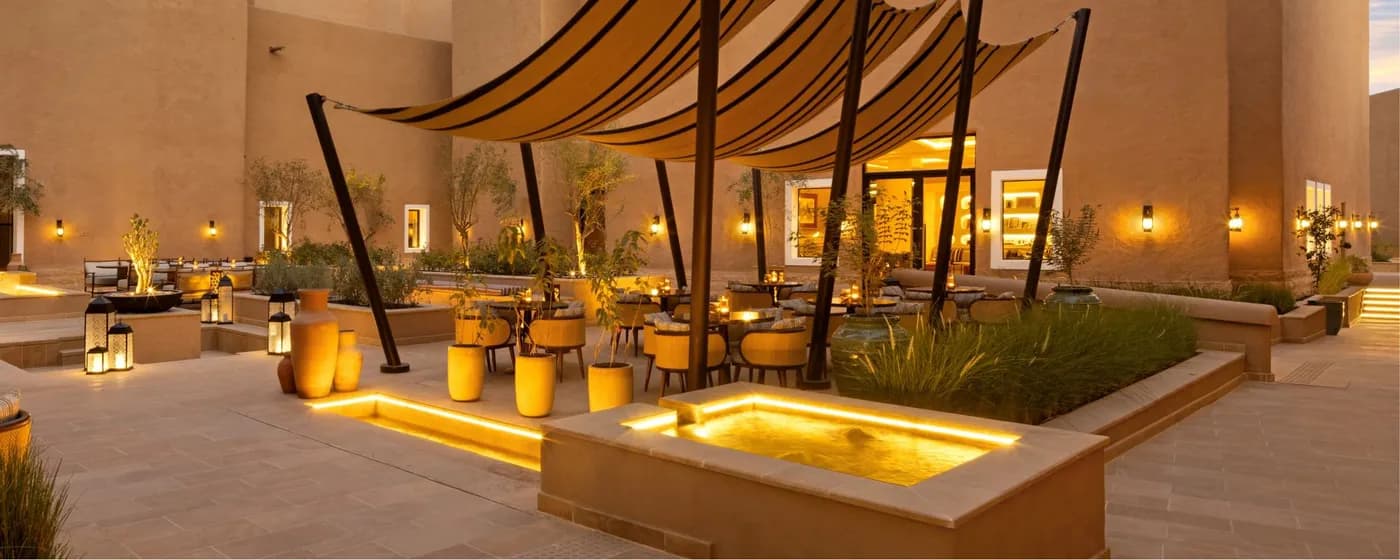
Bab Samhan, A Luxury Collection Hotel, Diriyah, is the first luxury hotel to open within the Diriyah heritage precinct, and it is a statement property. The architecture is drawn directly from the traditional Najdi vernacular: mud-brick walls, arched colonnades, latticed wooden screens, and materials that feel continuous with the ancient district surrounding it. 80 rooms and suites, each designed as an extension of the heritage landscape, with views across Wadi Hanifah and the At-Turaif plateau.
Staying at Bab Samhan gives you access to Diriyah at the hours when it is most extraordinary, before the day visitors arrive in the morning, and after they leave in the evening. The hotel's location within the Diriyah development means guests can walk to the Al Bujairi Terrace restaurants, the heritage district, and the open-air event spaces without a car. It is one of the most distinctive hotel experiences in Saudi Arabia, not competing with the Ritz-Carlton's palace grandeur, but offering something entirely different: sleeping inside a world heritage site.
Dining
Al Bujairi Terrace is the dining and cultural district that has opened adjacent to the At-Turaif ruins, a sequence of restaurants and cafés with outdoor terraces that look directly across to the illuminated mud-brick walls of the UNESCO district. At dusk, when the heritage lighting comes on and the call to prayer echoes across the wadi, it is one of the most atmospheric dining settings in the Kingdom. The quality of the restaurants ranges from fine Saudi cuisine to international concepts, in line with the broader Diriyah ambition to become a leading cultural destination.
The most atmospheric evening in Riyadh is dinner at Al Bujairi Terrace followed by a guided evening walk through At-Turaif. Several operators offer private evening heritage tours timed around dinner reservations, and your hotel concierge can arrange this combination. It works particularly well for first-time Saudi visitors who arrive from the Ritz-Carlton or Four Seasons in Riyadh and want a complete cultural evening without leaving the city.
Comparison
Diriyah and AlUla are Saudi Arabia's two greatest heritage destinations, but they are fundamentally different experiences. Diriyah is urban and civic: the birthplace of the Saudi state, 18th-century Islamic architecture, and a story that is directly tied to the founding of modern Saudi Arabia. It is 20 minutes from central Riyadh and the ideal half-day or evening addition to a city-based itinerary. AlUla is ancient and remote: pre-Islamic Nabataean tombs, 2,000-year-old carvings, and a desert landscape that was off-limits to visitors until very recently.
Both are essential. Most luxury Saudi itineraries include Diriyah as part of a Riyadh stop, and AlUla as a dedicated 3–4 night destination. If you can only visit one: AlUla wins purely on uniqueness, there is no equivalent heritage landscape in the world. But Diriyah is the more emotionally resonant experience for anyone trying to understand who Saudi Arabia is and where it came from. For that, an afternoon in At-Turaif is irreplaceable.
Planning Your Diriyah Visit
How long do you need in Diriyah?
A half-day (3–4 hours) is sufficient for a well-guided visit to At-Turaif plus dinner at Al Bujairi Terrace. A full day allows for a deeper heritage experience including the King Salman Palace Museum, the Najdi Heritage Village, and a leisurely walk through the developing Wadi Hanifah precinct. Staying overnight at Bab Samhan converts it into the centrepiece of a longer Riyadh itinerary.
What is the best time of day to visit?
Late afternoon, arriving around 4pm, exploring At-Turaif as the light turns golden, then transitioning to dinner at Al Bujairi Terrace at sunset. The heritage lighting activates after dark and the atmosphere is extraordinary. Midday visits in summer (April–September) should be avoided, the mud-brick district has no shade and temperatures exceed 40°C.
Do you need a guide?
For At-Turaif specifically, a private guide adds significant value. The district has multiple layers of political and religious history that are not self-evident from the architecture alone, and a good guide contextualises what you are seeing within the broader story of how Saudi Arabia was formed. Your hotel concierge can arrange private licensed heritage guides.
How does Diriyah fit into a Riyadh itinerary?
Most naturally as a late-afternoon/evening on Day 1 or Day 2 of a Riyadh visit. The 15-minute drive from the Ritz-Carlton or Four Seasons is easy, the hotel concierge arranges private car transfers. Combining an afternoon at At-Turaif with dinner at Al Bujairi Terrace is the most efficient use of a single evening and the single experience most guests retrospectively describe as their Riyadh highlight.
Stay Inside Diriyah
Bab Samhan, A Luxury Collection Hotel, is the only luxury hotel within the Diriyah heritage precinct, offering morning and evening access to At-Turaif before and after day visitors arrive.
Book Bab Samhan, Diriyah
Check availabilityOr book direct with
We compare 2 sites at no cost. Same price as booking direct.